
Blackjack: table rules that genuinely change the house edge (S17/H17, DAS, surrender)
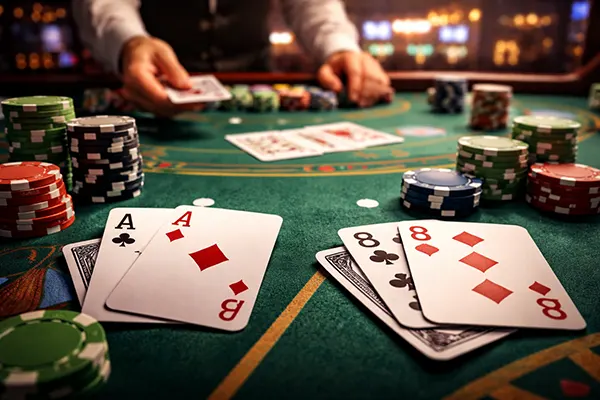
Blackjack is one of the few casino games where small rule details meaningfully change the maths. Two tables can look identical—same stake, same number of decks, same dealer speed—yet one quietly costs you more per hour because of a single line on the felt: “Dealer hits soft 17”, “Double after split not allowed”, or “No surrender”. In 2026, those details matter even more because many venues compensate for competitive markets by tightening rules rather than changing the headline experience.
S17 vs H17: the soft-17 rule that changes everything
“Soft 17” means a hand totaling 17 where an Ace can still count as 11, such as A+6. With S17, the dealer must stand on that total; with H17, the dealer must take another card. That extra draw is not a neutral “more action” rule—it gives the dealer more chances to improve from a relatively weak stopping point into 18–21, and that directly pushes expected loss against the player.
In practical terms, H17 tends to be worse because it converts some dealer soft-17 outcomes—where you would otherwise win with 18, 19, 20, or 21—into dealer upgrades that beat you or at least push. The effect is steady and long-run: it doesn’t feel dramatic in a short session, but over thousands of hands it shows up as a higher average cost per £100 wagered.
When you’re comparing tables, treat S17 as a genuine “favourable rules” marker. If you’re forced into H17, you can still play solid blackjack, but you should be stricter about getting the other details right (especially payouts and doubling rules) because H17 already pushes the baseline in the house’s direction.
How the soft-17 rule changes basic decisions in real play
The soft-17 rule changes more than the headline edge; it changes correct decisions in common spots, especially with soft hands. Many players are surprised that “A+7” (soft 18) sometimes wants an aggressive play. Under H17, doubling soft 18 against a dealer 2–6 becomes more attractive than it is under S17 because the dealer is more likely to improve from a soft hand and you gain value by pushing your advantage while the dealer is still weak.
Another place players get caught is soft 19 (A+8). At many S17 tables, this is a straightforward stand almost always, but under some H17 rulesets (and depending on allowed doubles) a double can become correct against specific dealer upcards. You don’t need to memorise every edge case to be a disciplined player, but you do need to recognise that “soft hands are flexible” is not a slogan—it’s the reason H17 has knock-on effects.
The clean approach in 2026 is to use a basic strategy chart that matches the table conditions rather than a generic chart you learned years ago. If you won’t use charts at all, at least remember the principle: H17 makes the dealer’s weak upcards slightly less weak, so marginal “stand vs take action” decisions become more sensitive and your mistakes get punished faster.
DAS: double after split, and why it’s not a small detail
DAS means you’re allowed to double down on hands created after splitting a pair. Without DAS, the casino removes one of your best tools: taking a strong, high-value situation that starts with a split and turning it into a bigger expected win. This rule matters because splitting is common, and the profitable follow-up doubles are not rare corner cases.
The classic example is splitting 8s against a dealer 6. After the split, you might receive a 3 (making 11) or a 2 (making 10). With DAS, doubling those totals is powerful because the dealer is in a weak position and you’re pressing value when you have it. Without DAS, you’re forced to play smaller, which doesn’t just reduce your upside—it increases the house advantage because you’re prevented from making the mathematically best wager when the situation favours you.
In 2026 table shopping, DAS is often the “quiet differentiator” between two games that both advertise 3:2 payouts and look respectable. If you’re trying to keep the game as close to fair as it gets, DAS is one of the rules worth actively seeking, especially in multi-deck games where casinos already have more built-in protection than in single-deck.
Where DAS pays you back: the hands players misjudge
Most players understand doubling 11 against a dealer 6 in a normal hand. Where people hesitate is doing the same after a split, even when DAS is allowed. The maths doesn’t care whether the 11 was “born” from a split or from your original two cards; if doubling is permitted, you should treat the situation the same way and take the higher expected value line.
DAS also matters with split Aces in rulesets that allow more flexible play after the split (many tables restrict hitting or doubling after splitting Aces, and you should assume restrictions unless the rules clearly state otherwise). In games where you can split, draw, and then double on certain outcomes, the value comes from converting good draws into bigger bets while the dealer is still statistically vulnerable.
If you want a quick mental shortcut: when you see “No DAS”, assume you must tighten your table standards elsewhere to compensate. If the game is also H17 or has other restrictions (limited re-splits, no re-splitting Aces, double only on 10/11), the combined effect can turn what looks like standard blackjack into a noticeably more expensive game over time.
Surrender: when losing half is the correct play
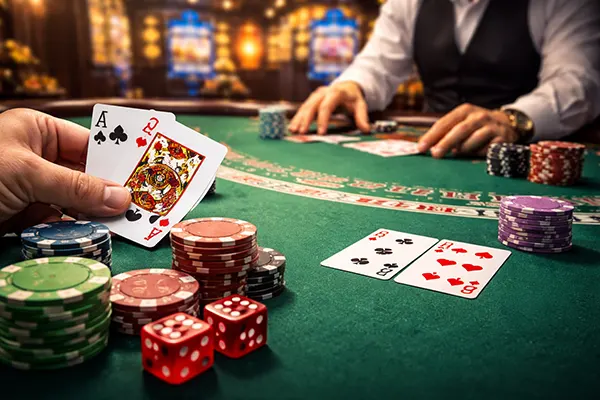
Surrender allows you to forfeit your hand and lose only half your bet instead of playing it out. That sounds defeatist until you realise what it really is: an option to cap losses in situations where the maths says you are more likely than not to lose the full unit. When used correctly, surrender reduces the house advantage because it replaces a bad full-loss expectation with a controlled half-loss.
In most modern casinos, if surrender exists at all, it’s usually late surrender: the dealer first checks for blackjack (when showing an Ace or 10-value card), and only then you’re allowed to surrender. Early surrender—where you can surrender before the dealer checks—is rarer and much stronger for the player. You should not assume early surrender unless the rules explicitly state it.
The practical value of surrender is not that you use it constantly; it’s that it saves you from a small set of consistently ugly positions. If you play long sessions, those saved half-bets add up, and they also smooth volatility because you avoid high-frequency “nearly dead” hands that otherwise bleed full stakes.
Late surrender in practice: the spots that matter most
Under late surrender with standard basic strategy, the most commonly taught spot is hard 16 versus a dealer 10. Many players hate this hand because every option feels wrong: hitting risks busting, standing relies on dealer busting, and doubling is usually nonsense. Surrender is the clean answer when it’s offered, because the average outcome of playing it out is typically worse than simply taking the half-loss and moving on.
Hard 15 versus a dealer 10 is another frequent surrender, and some rule sets also make surrender correct with 15 versus a dealer 9. The exact boundaries can shift with the number of decks, whether the dealer is H17 or S17, and whether the dealer peeks for blackjack. That’s why the best advice is not “memorise two hands”, but “match surrender decisions to the actual table rules”.
A common mistake in 2026 is using surrender emotionally rather than mathematically: surrendering any uncomfortable total, or surrendering when you should be doubling (like a strong 11 or 10 against the right dealer upcards). Used properly, surrender is a scalpel, not a panic button. If you treat it as a targeted tool—mainly for certain stiff hands against strong dealer upcards—it does exactly what it’s meant to do: reduce the long-run cost of playing.